异步模式:生产者&消费者
与前面的保护性暂停中的 GuardObject 不同,异步模式不需要产生结果和消费结果的线程一一对应。 消费队列可以用来平衡生产和消费的线程资源,生产者仅负责产生结果数据,不关心数据该如何处理,而消费者专心处理结果数据。 消息队列是有容量限制的,满时不会再加入数据,空时不会再消耗数据。JDK 中各种阻塞队列,采用的就是这种模式。
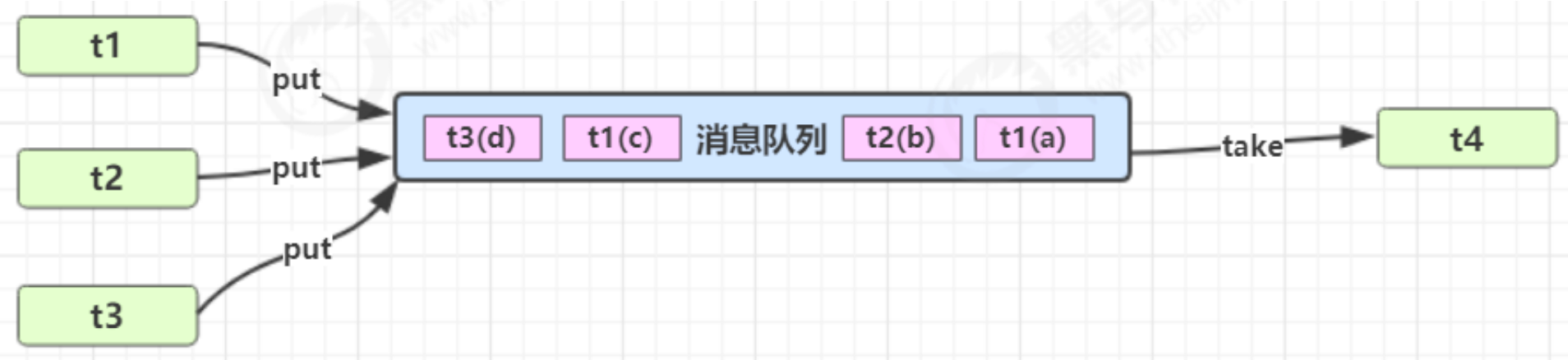
消息队列
消息类: 生产者和消费者通信的对象
@Getter
final class Message {
    private final int id;
    private final Object value;

    public Message(int id, Object value) {
        this.id = id;
        this.value = value;
    }

    @Override
    public String toString() {
        return "Message{" +
                "id=" + id +
                ", value=" + value +
                '}';
    }
}
消息队列: 生产者和消费者通信的操作
class MessageQueue {
    // 消息的队列集合
    private final LinkedList<Message> list = new LinkedList<>();
    // 队列容量
    private final int capcity;

    public MessageQueue(int capcity) {
        this.capcity = capcity;
    }

    // 获取消息
    public Message take() {
        // 检查队列是否为空
        synchronized (list) {
            while (list.isEmpty()) {
                try {
                    log.debug("队列为空, 消费者线程等待");
                    list.wait();
                } catch (InterruptedException e) {
                    e.printStackTrace();
                }
            }
            // 从队列头部获取消息并返回
            Message message = list.removeFirst();
            log.debug("已消费消息 {}", message);
            list.notifyAll();
            return message;
        }
    }

    // 存入消息
    public void put(Message message) {
        synchronized (list) {
            // 检查对象是否已满
            while (list.size() == capcity) {
                try {
                    log.debug("队列已满, 生产者线程等待");
                    list.wait();
                } catch (InterruptedException e) {
                    e.printStackTrace();
                }
            }
            // 将消息加入队列尾部
            list.addLast(message);
            log.debug("已生产消息 {}", message);
            // 通知消费者有消息可以消费了
            list.notifyAll();
        }
    }
}
测试生产者和消费者:
public static void main(String[] args) {
    MessageQueue queue = new MessageQueue(2);
    for (int i = 0; i < 3; i++) {
        int id = i;
        new Thread(() -> {
            queue.put(new Message(id, "值" + id));
        }, "生产者" + i).start();
    }
    new Thread(() -> {
        while (true) {
            sleep(1);
            Message message = queue.take();
        }
    }, "消费者").start();
}
Last updated on