终止模式:两阶段终止模式
Two Phase Termination
在一个线程 T1 中如何“优雅”终止线程 T2?这里的【优雅】指的是给 T2 一个料理后事的机会。
错误思路:
- 使用线程对象的 stop() 方法停止线程:stop 方法会真正杀死线程,如果这时线程锁住了共享资源,那么当它被杀死后就再也没有机会释放锁,其它线程将永远无法获取锁
- 使用 System.exit(int) 方法停止线程:目的仅是停止一个线程,但这种做法会让整个程序都停止
两阶段终止模式:
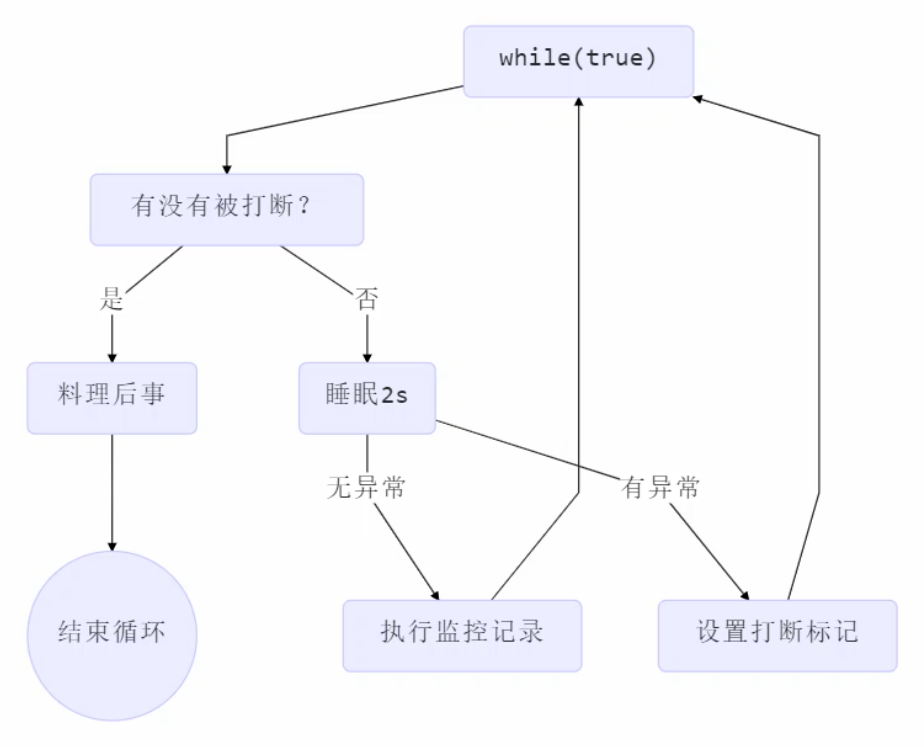
利用isInterrupted
interrupt 可以打断正在执行的线程,无论这个线程是在 sleep,wait,还是正常运行。
代码实现:
public class TestInterrupt03 {
    public static void main(String[] args) throws InterruptedException {
        TwoPhaseTermination t1 = new TwoPhaseTermination();
        t1.start();
        Thread.sleep(3500);
        t1.stop();
    }
}

@Slf4j
class TwoPhaseTermination {
    private Thread thread;

    // 开启监控线程
    public void start() {
        thread = new Thread(() -> {

            while (true) {
                Thread current = Thread.currentThread();
                if (current.isInterrupted()) {
                    log.debug("料理后事");
                    break;
                }

                try {
                    Thread.sleep(1000); // 情况1:睡眠的时候被打断
                    log.debug("执行监控记录");  // 情况2:操作的时候被打断
                } catch (InterruptedException e) {
                    e.printStackTrace();
                    // 如果睡眠的时候被打断,打断标记会被重置
                    // 所以这里重新设置打断标记
                    current.interrupt();
                }

            }

        });

        thread.start();
    }

    // 停止监控线程
    public void stop() {
        thread.interrupt();
    }
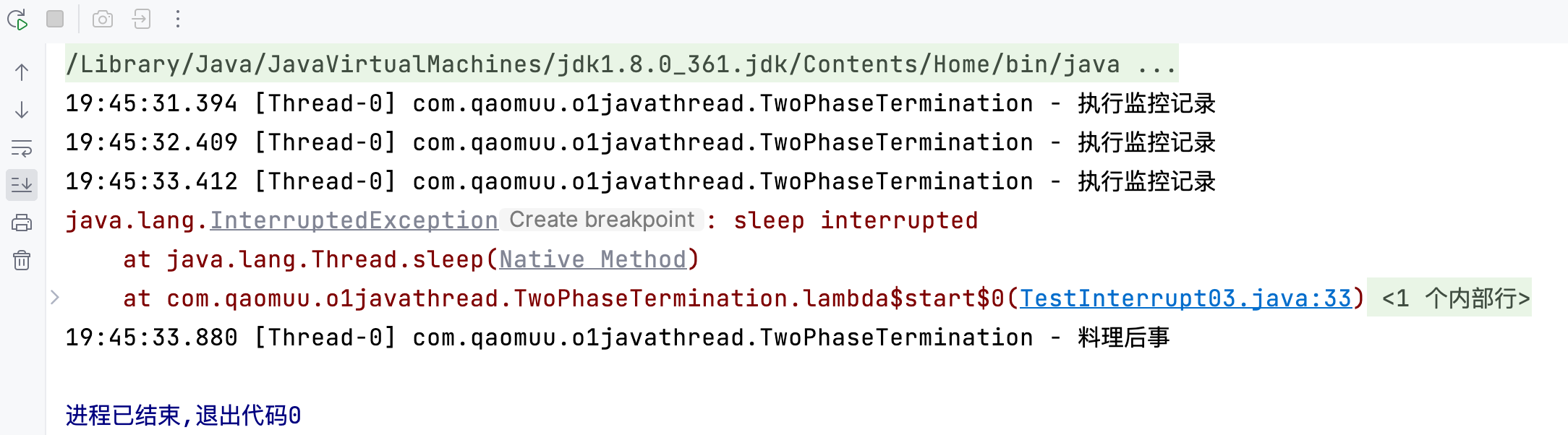
}
利用停止标记 volatile
// 监控线程
private Thread monitorThread;
// 停止标记
private volatile boolean stop = false;

// 启动监控线程
public void start() {
    monitorThread = new Thread(() -> {
        while (true) {
            Thread current = Thread.currentThread();
            // 是否被打断
            if (stop) {
                log.debug("料理后事");
                break;
            }
            try {
                Thread.sleep(1000);
                log.debug("执行监控记录");
            } catch (InterruptedException e) {
            }
        }
    }, "monitor");
    monitorThread.start();
}

// 停止监控线程
public void stop() {
    stop = true;
    monitorThread.interrupt();
}
Last updated on